WorkflowsResponses
From Forms to Better Decisions
Discover how structured information helps teams collect, organize, and act on the insights that matter.
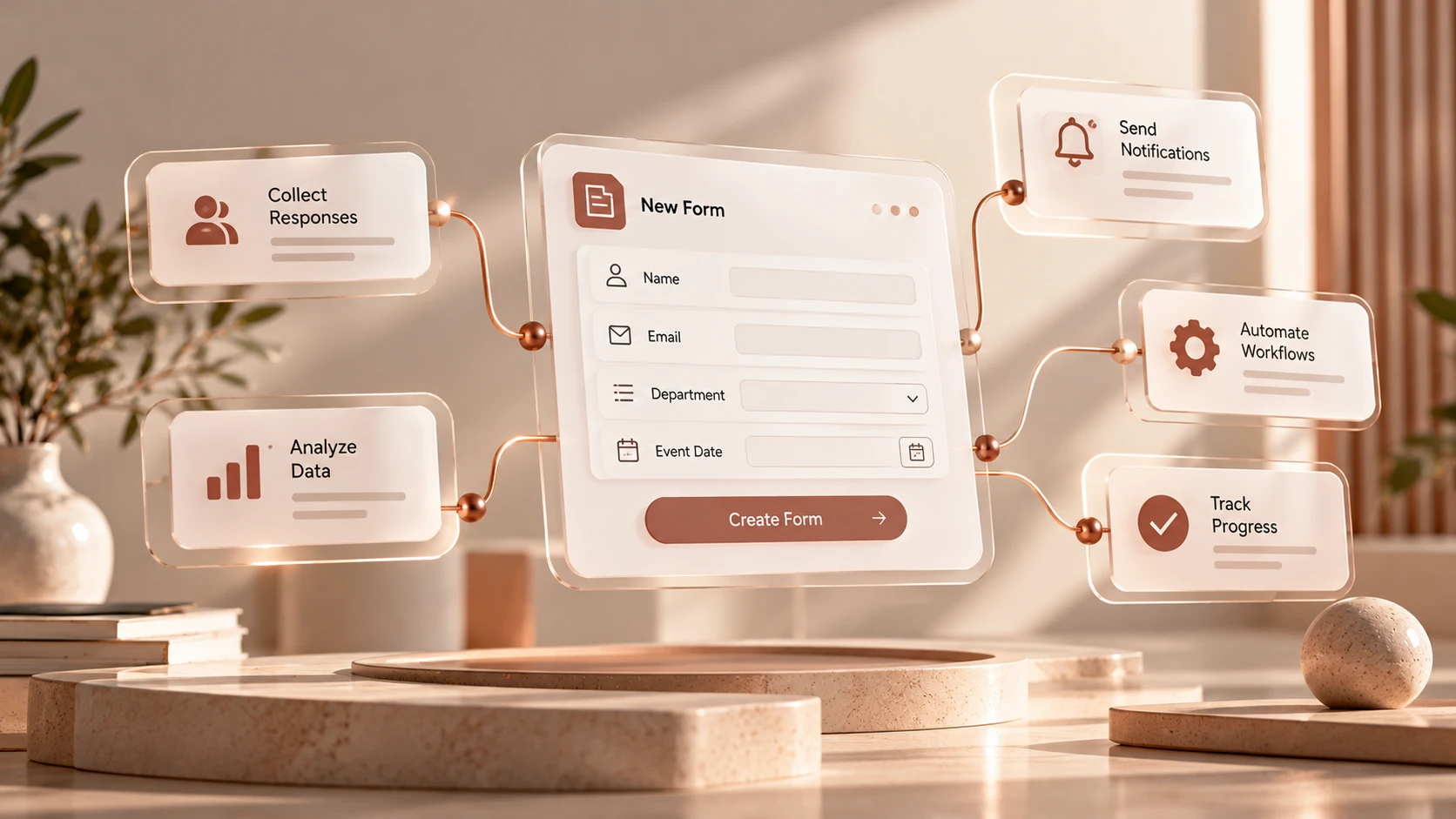
A form is the beginning of a conversation, not the end of a process. Its value comes from what happens after someone shares information: who reviews it, how it is organized, and which decision it helps someone make.
Before choosing questions, finish this sentence: We need this information so that we can… If the answer is vague, the form may be collecting more than the team can use.
Start with the decision
A request for an event location needs different information from a request for a new supplier. Write down the decision, the person responsible, and the minimum evidence they need. Then turn those needs into questions.
For a supplier review, that might mean asking about the service required, expected timing, and the person requesting it. Avoid collecting additional details simply because they might be useful someday.
Give responses a consistent structure
Free text is valuable for context, but repeated information benefits from consistent choices. Use a short list of options when the answers need to be compared, and leave space for an explanation when an option cannot tell the whole story.
| Information needed | Useful question approach |
|---|---|
| Type of request | A short, clearly defined list |
| Reason for the request | A focused written explanation |
| Timing | A date or a defined time window |
| Additional context | An optional open question |
The goal is useful consistency, not forcing every situation into the same box.
Decide what happens next
Every collection process needs an owner. Agree who checks incoming responses, where questions are raised, and what marks a request as complete. A simple shared routine is often more useful than an elaborate process nobody maintains.
- Review incomplete responses before comparing them.
- Keep an explanation of each status close to the work.
- Record the next action and who is responsible for it.
- Separate an observation from the decision made because of it.
Close the loop
Tell contributors what their input is for and, where appropriate, what happened next. You do not need to share every internal discussion. A concise explanation helps people understand why answering was worthwhile.
Good collection creates a path from a question to an informed next step.
Try a small improvement
Choose one existing form. Remove a question that does not support its decision, clarify one ambiguous option, and agree a review routine with the people using the responses. These small changes make the entire workflow easier to understand.